Digital Memory Agents in the Canadian Anthropocene

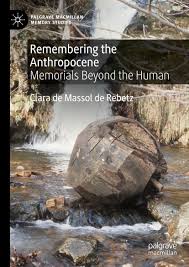
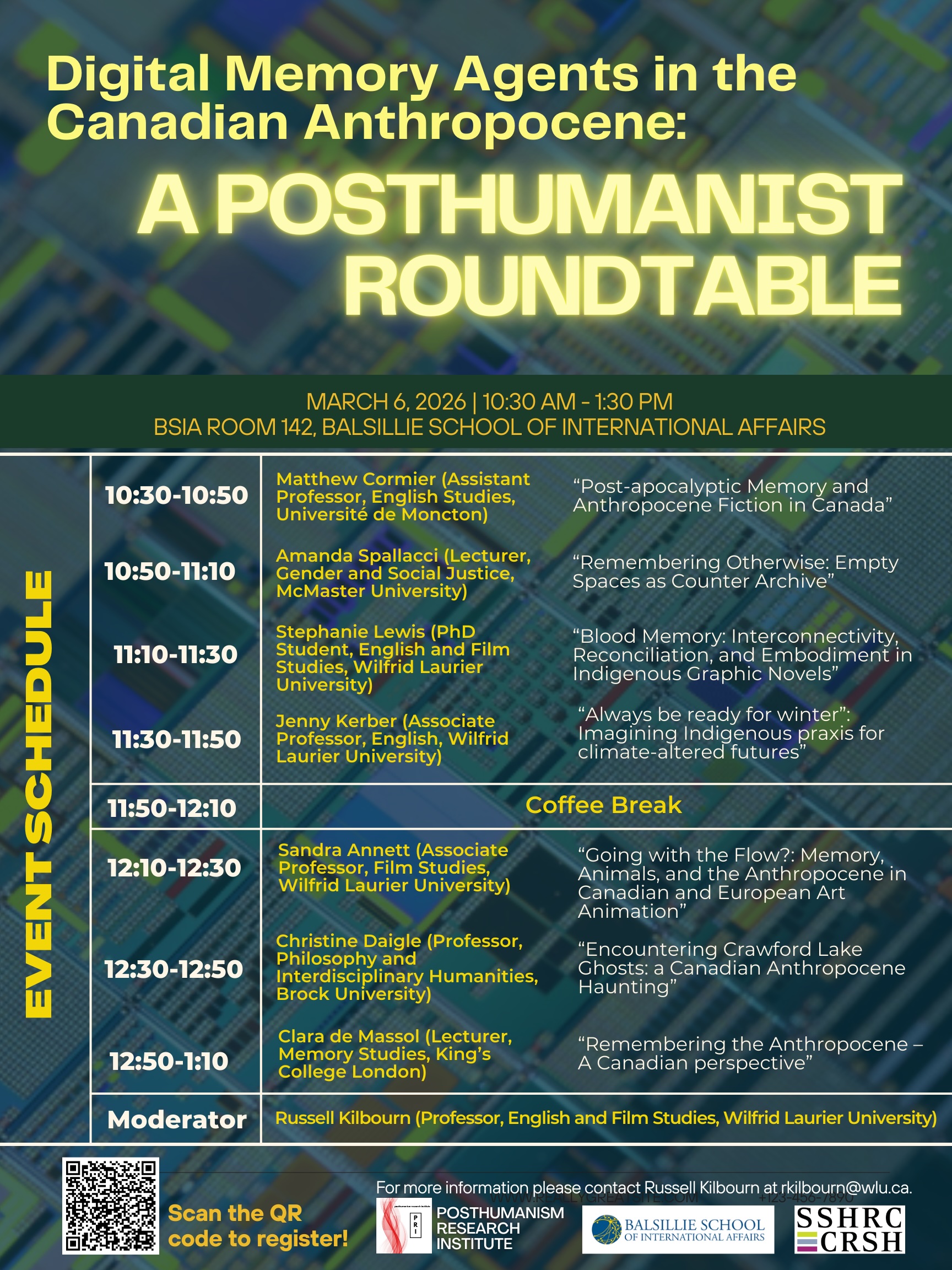
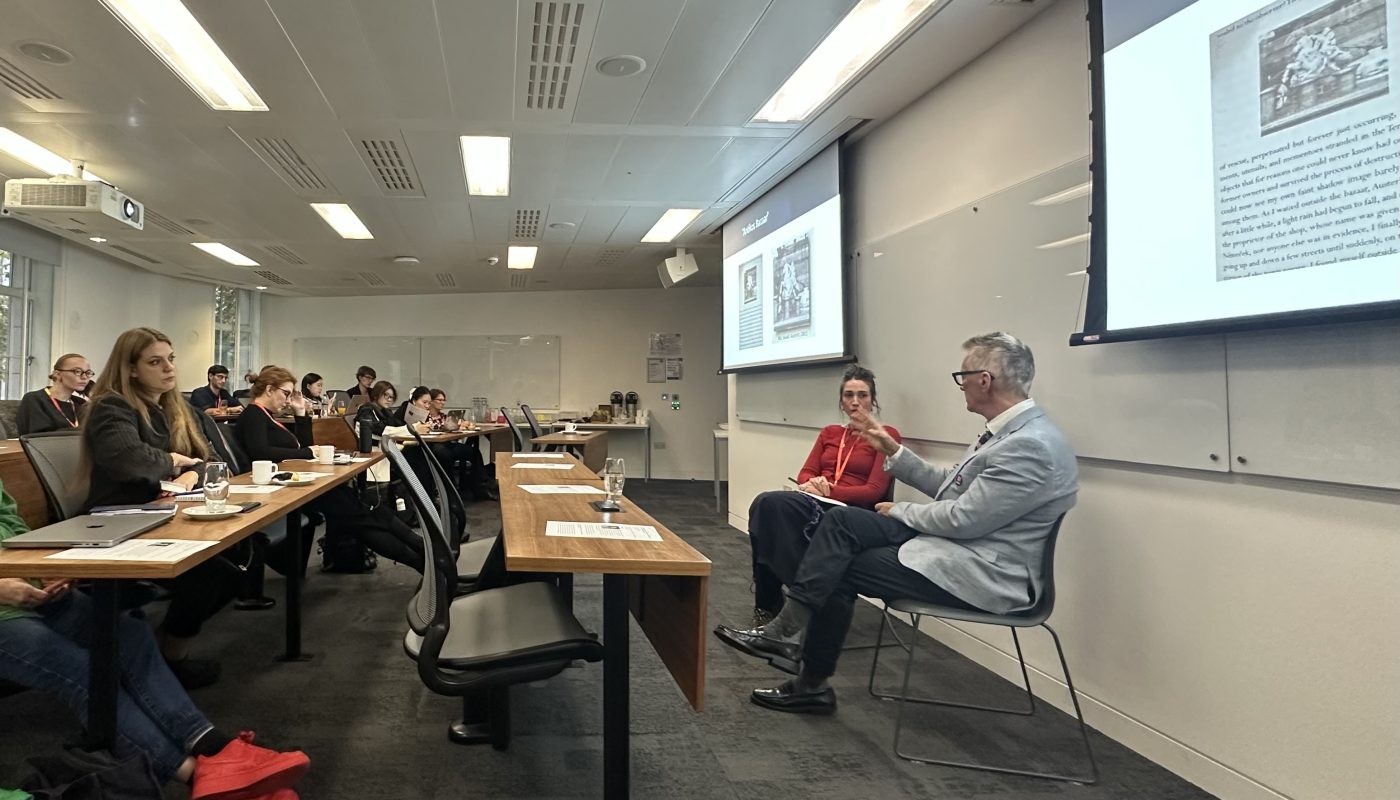
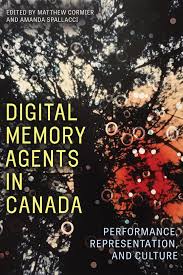
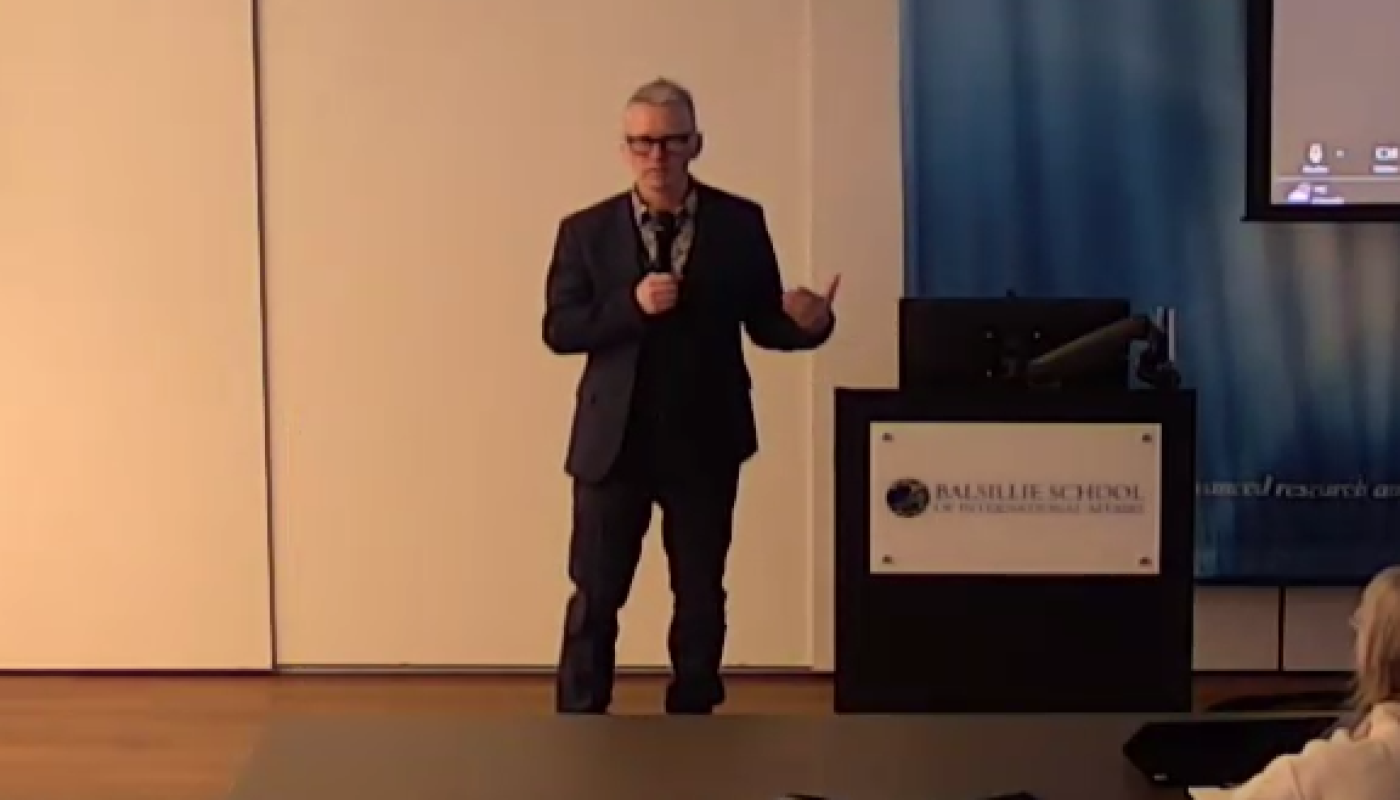
On Friday March 6th, the Department of English and Film Studies at Wilfrid Laurier University hosted a “Posthumanist Roundtable” at Balsillie School of International Affairs, in association with the Posthumanism Research Institute (Brock) and co-sponsored by SSHRC. Titled “Digital Memory Agents in the Canadian Anthropocene,” and moderated by Dr. Russell Kilbourn, the roundtable featured presentations from a diverse group of scholars: Dr. Sandra Annett, Dr. Jenny Kerber, and current PhD student Stephanie Lewis, all from English and Film Studies. Rounding out the roundtable were: Dr. Matthew Cormier (English Studies, Université de Moncton), Dr. Amanda Spallacci (Gender and Social Justice, McMaster University and EN/FS alumnus), and Christine Daigle (Philosophy, Brock University). The roundtable was a true posthumanist mash-up, putting two recent publications—Spallacci and Cormier’s Digital Memory Agents in Canada: Performance, Representation, and Culture (University of Alberta Press 2024) and Clara de Massol’s Remembering the Anthropocene: Memorials Beyond the Human (Palgrave Macmillan 2024)—into dialogue, with this diverse group of scholars exploring specific issues, questions, and problems arising from the juxtaposition of the two texts and their respective interventions into debates at the intersection of the Anthropocene, climate change, memory, and posthumanism. Participants offered brief but detailed presentations of projects bringing together Indigeneity, Canadian literature, post-apocalyptic eco-narratives, graphic novels, digital animation, counter memories and counter-archives, and nonhuman memory agents. Conceived independently, all six presentations nevertheless wove together with surprising seamlessness. The highly engaged audience participated in a lively discussion following each half, and the day concluded with the shared recognition of the world in its astonishing capacity as an agent of memory beyond the human and the myriad cultural forms through which our experience of the world is mediated.
Upcoming Posthumanist Roundtable

Hosted by Wilfrid Laurier University, and in affiliation with the Posthumanism Research Institute (PRI) and the Basillie School of International Affairs, is an upcoming posthumanist roundtable on March 6 in Waterloo, Canada entitled “Digital Memory Agents in the Canadian Anthropocene.” For tickets and information on the event, please see the host website. For presentation line up, see below.

What is the human? at HGSS

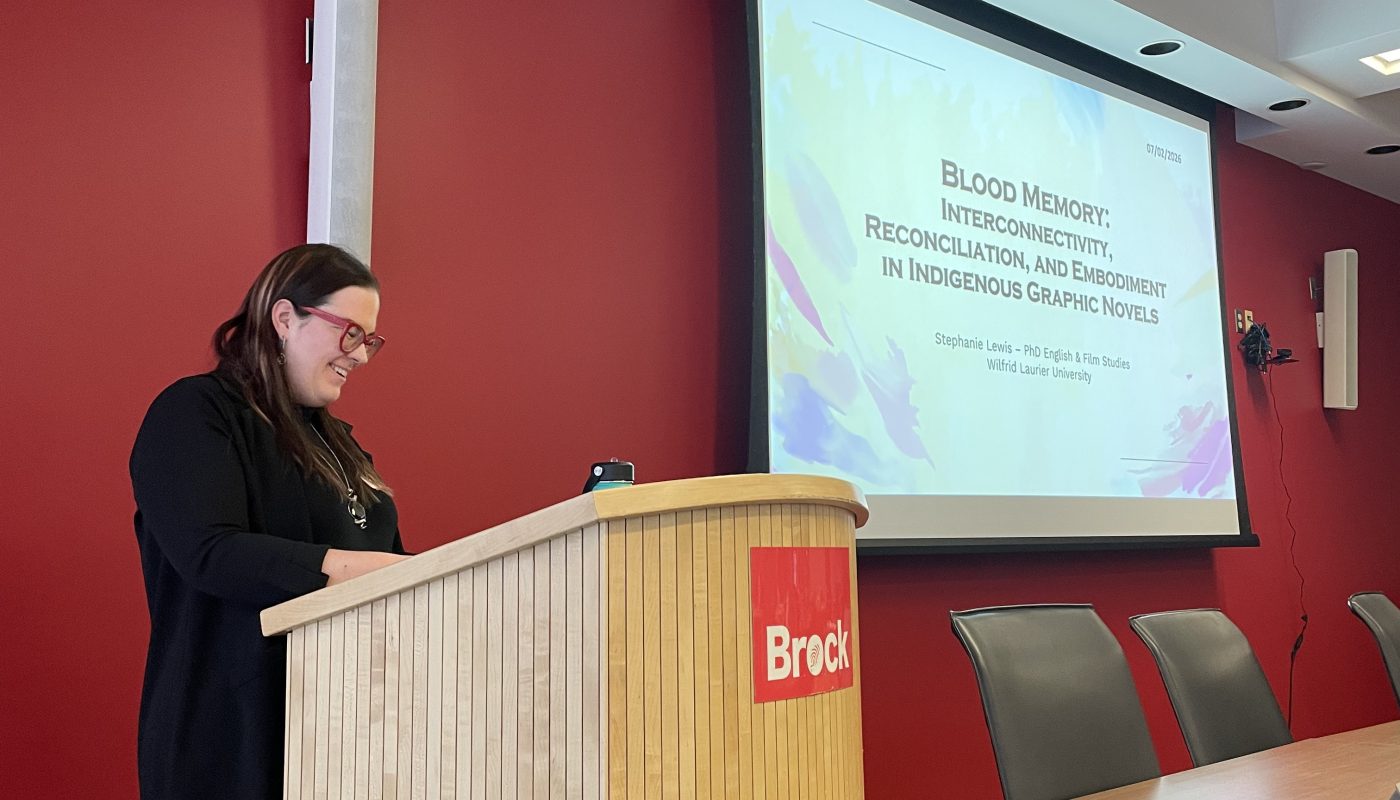
On Saturday Feb. 7, PhD student Stephanie Lewis presented the earliest stages of her posthumanist memory project entitled “Blood Memory: Interconnectivity, Reconciliation, and Embodiment in Indigenous Graphic Novels” at Brock University’s annual Humanities Graduate Student Symposium. This being the first year that Brock extended the invitation to other universities, Stephanie was one of two students representing Wilfrid Laurier University, exploring the overarching theme of the event “What does it mean to be human?” For more information on the event, abstracts and listing of presenters, please see the HGSS site here.

Wrapping Up at University of Ghent

On Monday Oct. 27 and Tuesday Oct. 28 Russell Kilbourn presented two more talks, both at the University of Ghent in Belgium. The first, ‘The Representation of History in Four Holocaust films: Night and Fog (1956), Schindler’s List (1993), Son of Saul (2015), and The Zone of Interest (2023)’, was delivered to an audience of faculty and students in the History department, and was part of the yearly lecture series sponsored by the interdisciplinary research forum ‘TAPAS/Thinking About the PASt’. The second, ‘Immanent Frames: from Non-Human to Posthuman(ist) Memory in Contemporary Film Narrative’, presented under the auspices of the Cultural Memory Studies Initiative, was part of their longstanding lecture series, which has featured a wide range of distinguished scholars, including Geoffrey Hartman, Roger Luckhurst, Ann Rigney, Michael Rothberg, Lyndsey Stonebridge, Sue Vice, and Anne Whitehead.

The Future of Memory at King’s College, London

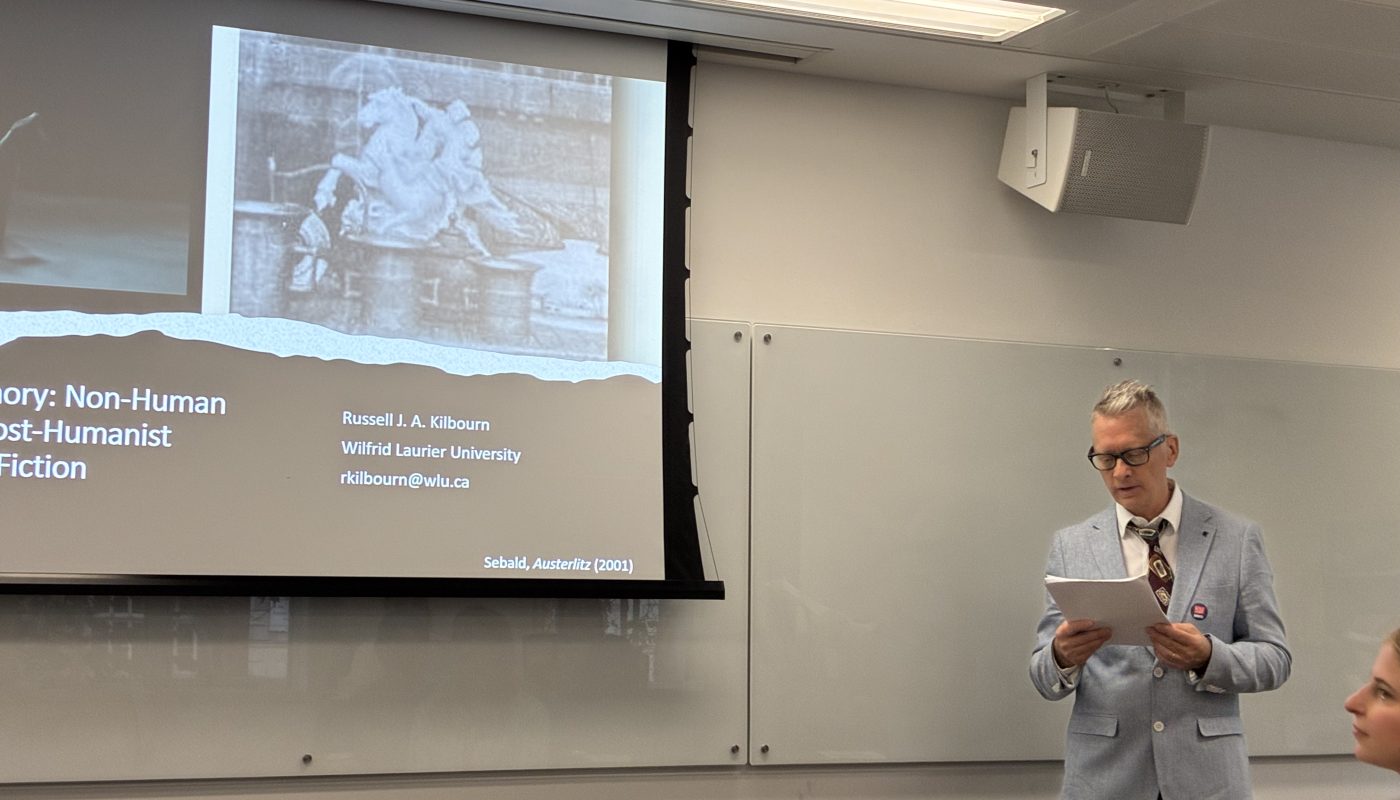
On Wednesday Oct. 22nd Dr. Kilbourn gave a talk titled ‘The Future of Memory: Non-Human Memory and the Post-Humanist Elegiac in Film and Fiction’ at King’s College, London, under the auspices of the Department of Culture, Media, and Creative Industries (CMCI). The talk was attended by over 40 faculty members and students, and was very well-received, with a lively Q+A panel (and wine and cheese) following.

Upcoming TAPAS lecture

Another lecture by Professor Russell Kilbourn will be taking place at the University of Ghent, Belgium on October 27th for TAPAS (Think About the Past) entitled “The Representation of History in Four Holocaust films: Night and Fog, Schindler’s List, Son of Saul, and The Zone of Interest“. For more information see here.

Abstract

In this talk Dr. Russell Kilbourn invokes the Holocaust as a limit-case for investigating what a meaningful posthumanist aesthetic ideology might look like: an aesthetic in response to a world ready to do without the human, while the human propensity to treat other humans as less-than-human allows for the emergence of a properly posthumanist subject, however negatively defined. This begs the question at the core of a meaningful posthumanist critique of the Enlightenment tradition: What do we ever mean by ‘human’? By its very nature as a historical event, the Holocaust crystallizes all the issues and debates around the representation, mediation, transmission, distortion, or misrepresentation of anti-human atrocity on an unimaginable scale.

Eighty years on, the Holocaust moves from the embrace of living memory and firsthand recollection into the realm of collective cultural memory. In the 21st century, cultural producers with no direct or lived connection to the Holocaust continue to address the genocide of Europe’s Jews. Through close comparison of four key texts—Night and Fog (Alain Resnais 1956), Schindler’s List (Steven Spielberg 1993), Son of Saul (László Nemes 2015), and The Zone of Interest (Jonathan Glazer 2023)—I explore the possibility of ‘bearing witness’ through fiction film. Rather than seeing the Holocaust as unrepresentable because it is unimaginable or unspeakable (see e.g. Adorno 1949; Wiesel 1989), we must continue to tell stories about the Holocaust “because it is unspeakable” (Bruck 2007). The further away in time, the more an event is subject to the shared memory schemata of fictional narrative: memory as remediation or ‘rememoration’. This aligns with the concomitant shift in Holocaust studies, away from a privileging of individual and collective memory grounded in lived experience, toward an expanded recognition that even such seemingly authentic memorial-testimonial bearing-witness is itself always already determined by the medium in which it is captured, preserved and, hopefully, passed on.

Upcoming CMCI Research Seminar

Professor Russell Kilbourn will be conducting a seminar for the Culture, Media and Creative Industries Department at King’s College London on Wednesday, October 22nd entitled “The Future of Memory: Non-Human Memory and the Post-Humanist Elegiac in Film and Fiction.” For more information, see the event poster below, or check out the CMCI events page closer to the date.

Upcoming CMSI Lecture

Professor Russell Kilbourn is set to speak at the Cultural Memory Studies Initiative on Tuesday October 28th at the University of Ghent, Belgium with a lecture titled “Immanent Frames: Non-Human and Posthuman(ist) Memory in Postsecular Narrative Cinema.” For more information about the event, please see here.

Abstract

This talk compares a set of films in which the human subject is de-privileged or -centred, despite narrative cinema’s historical dependence on the human face, body, and voice. Another way of talking about the postsecular era, Charles Taylor’s concept of the ‘immanent frame’—“the disenchanted worldview of the secular age” (Caruana and Cauchi 2018)—also references the literal frame that determines the filmic image, imposing formal, semantic, and ontological limits on the onscreen world, reinforcing the properly immanent status of film form, denying in its very materiality the possibility of transcendence. Reflexive and self-critical, the postsecular represents an “incredulity toward the secularist narrative” supposedly constitutive of western modernity in which the question of belief or faith has never gone away (Caruana and Cauchi 4). The postsecular frames the privileging of immanence over transcendence fundamental to many posthumanist critiques of the Humanist tradition. This talk puts the postsecular into conversation with the posthumanist critique of the Humanist philosophical legacy as it manifests in select films that explore the convergence of memory and the question of the human.

Transhumanist deference to a technologically augmented or artificial memory must be measured against the idea of an always already technically supported ‘natural’ memory. Arguably, memory has always been posthuman because it has always had a technological or prosthetic dimension. The distinction is between a posthuman memory symptomatic of the transformation of the human subject’s cognitive and emotional relation to time, and a posthuman-ist memory that comes after the human: after the time of the human, when ‘we’ are no longer here. ‘Posthuman memory’ is still human memory, whereas ‘posthumanist memory’ is memory no longer understood in (purely) humanist terms, as something belonging wholly to ‘man’. To take account of the future of memory in a posthumanist context is to acknowledge that there is another kind of memory that demands to be thought in a post-anthropomorphic context, challenging us to conceive of a nonhuman, radically other, agent of memory/remembering. The most urgent question is: Who/what does the remembering, in the time of the posthuman?

Welcome to the Futures of Memory!

Hello and welcome to Futures of Memory, a project that combines the fields of critical posthumanism with memory studies in the larger context of the reconceiving of what it means to be human in our evermore posthuman world. It also seeks to address questions of non-human memory and mnemic agency—who or what remembers?—in the face of the potentially absolute absence of the human. This SSHRC funded project is headed by Dr. Russell Kilbourn and PhD student Stephanie Lewis and is based at Wilfrid Laurier University. This website will provide a platform for updates on the project’s evolution, publications and other activities, resources for further academic study, and other relevant information for fellow academics and those interested in critical posthumanist studies. Check back often for news and inspiration!